Explore more than just conventional talk therapy
Brainspotting
Rapid, Powerful Healing That goes Beyond Talk Therapy
Brainspotting Therapy brings permanent relief, often in just a few sessions.
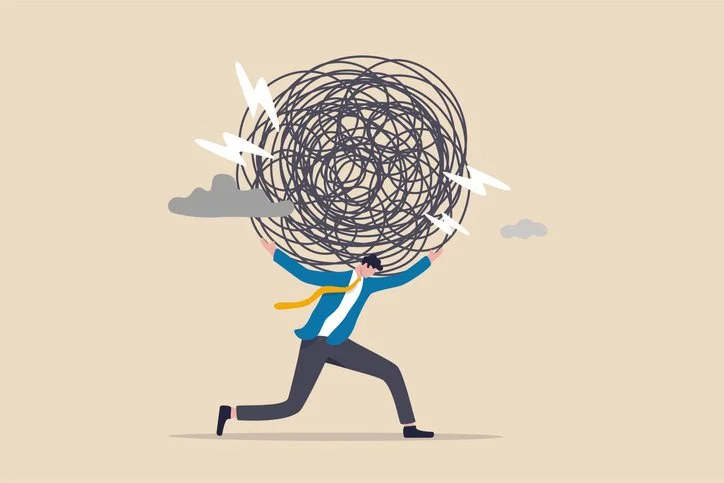
Brainspotting offers a different path forward when understanding alone hasn't been enough. You've gone to therapy, talked through your past, connected the dots between your childhood and your present. You can explain exactly why you struggle the way you do.
Brainspotting works because it reaches what talk therapy often can't. The anxiety still shows up uninvited. The trauma still lives in your body, making you jumpy or shut down. The patterns—feeling reactive, getting stressed, feeling like you're not good enough—keep playing out no matter how much insight you have.
What is Brainspotting Therapy?

Brainspotting is a therapy that uses your field of vision to access and heal trauma stored deep in your brain.
Where you look directly affects how you feel.
Think about when you're upset—your eyes might fix on a certain spot, or drift somewhere specific. That's not random. Your eye position is connected to where emotional pain and trauma are held in your brain—the deep, wordless places that control your nervous system.
In a Brainspotting session, I help you find the exact eye position—the "brainspot"—that connects to what you're struggling with. Then you hold your gaze there while tuning into what you're feeling in your body.
And your brain starts to release what it's been holding.
What Can Brainspotting Help With?

Trauma your body won't forget
The abuse that ended years ago but your nervous system still reacts to. The car accident you survived but still makes you afraid of driving.
Anxiety that doesn't listen to reason
The panic that floods you when you think about speaking. The hypervigilance that makes you scan the room for danger. The worry loop that keeps you up at night even when there's nothing objectively wrong.
Beliefs that run deeper than logic
"Something bad is going to happen." "I have to be perfect or I'm worthless." "People will leave if they really know me." You've challenged these thoughts a thousand times, but they still feel true in your gut.
Reactions that seem too big
Shutting down when someone raises their voice. Losing it over small things, Feeling caught in emotion you can’t get out of.
Parts of yourself you have lost
Your creativity, your playfulness, your wonder, your confidence, your optimism
Grief that won't move through
The death you can't accept. The relationship that ended but you still have so much pain. The version of yourself you had to let go of.
You don't have to keep living this way.
Schedule a free consultation to learn how Brainspotting can help your nervous system finally let go of what it's been carrying
What Happens in a Brainspotting Session

We identify what needs attention.
This could be a specific memory that haunts you. It could be anxiety that sits in your chest. It could be the overwhelm that hits you for no clear reason. You decide what we work on—and how much you share.
We locate your brainspot.
Using a pointer, I'll guide your eyes slowly across your field of vision while you stay connected to the issue. We're looking for where you feel the most intensity—where the sensation spikes, where your eyes want to land, where something shifts. Your brain will show us where the trauma is held.
You stay with it while your brain does the work.
Once we find the spot, you hold your gaze there while noticing what happens in your body. This is when the healing unfolds. Your brain begins to process, release, reorganize. Emotions might surface. Memories might arise. Tension might dissolve. Sometimes it's intense. Sometimes it's surprisingly gentle.
I stay with you through it all.
Guiding, supporting, witnessing. You're not alone in this. If it gets too much, we slow down or pause. You're always in control.
You leave feeling different.
Sometimes lighter. Sometimes tired. Sometimes quietly shifted in a way that's hard to articulate. The processing continues as you sleep,and live your life. And gradually, you notice: something that used to grip you... doesn't anymore.
What Does Brainspotting Actually Feel Like?

Here's what my clients often experience:
During the session:
Emotions moving through like waves
Physical shifts: muscles softening, jaw unclenching, breath deepening, spontaneous yawning or sighing
Clarity that feels different from intellectual understanding—more like recognition in your body
Sometimes tears. Sometimes quiet. Sometimes surprise at connections you never saw before.
Positive emotions of joy, gratitude, relief
I’m right there with you guiding you, helping you move at the pace your nervous system can handle, so that you can release what has been stuck.
After the session:
Many clients feel a sense of spaciousness, like something that was compressed has opened
Relief in places where tension used to live
Fatigue (your nervous system has been working hard)
Dreams that help integrate what you processed
A subtle but unmistakable sense that something has fundamentally changed
The shifts last. When healing happens at the brain and nervous system level, it's not about managing symptoms day after day. It's an actual release.
Let’s Help You Feel More Like yourself
Schedule Your Free 20-Minute Consultation
Expansion Brainspotting-Accessing What’s Right

Expansion Brainspotting: Reconnecting with Your Best Self
Therapy doesn't always have to be about what's wrong. Sometimes you need help accessing what's right—the confidence, creativity, joy, or sense of calm that feels out of reach.
Expansion Brainspotting helps you tap into and strengthen positive states, emotions, and qualities you want more of in your life. Instead of processing pain, you're building resources from the inside out.
This approach is powerful for:
Reconnecting with parts of yourself that trauma or stress has buried—your playfulness, creativity, or sense of wonder
Building confidence before a big presentation, performance, or life transition
Deepening feelings of safety, peace, or self-trust
Enhancing performance in work, sports, or creative pursuits
Strengthening your capacity to handle stress or uncertainty
If you've done trauma work and are ready to expand into who you want to become, or if you simply want to amplify what's already working in your life, Expansion Brainspotting offers a pathway to growth that feels generative rather than heavy.
You don't have to spend all your time in therapy looking at what's broken. Sometimes the most powerful healing comes from remembering—and embodying—what makes you feel most alive
How Long Does Brainspotting Take to Work?

Brainspotting often works faster than traditional therapy:
Many clients notice meaningful changes within the first few sessions
Some experience profound breakthroughs in a single session
Issues that felt permanent sometimes shift in weeks instead of years
Complex trauma and lifelong patterns can take time—healing isn't linear. But compared to years of talking about your problems, Brainspotting often brings relief at a pace that feels surprising.
You deserve more than survival. You deserve to truly live.

What if the hypervigilance could soften? What if you could stop feeling reactive? What if you could set boundaries without guilt? What if your body could finally feel safe?
Brainspotting won't erase what happened. But it can release your nervous system from the stress, worry and fear. It can help your body feel grounded and calm and give you back the capacity to be present, to connect, to rest.
Location:
San Jose, CA
Santa Cruz, CA

Let’s Get You Some Relief
Schedule your free 20-minute consultation today.
Questions?
FAQs
-
A: No. You can keep the story private if you want. Brainspotting works even when you don't speak the memories out loud. Your brain knows what needs healing—you don't have to relive it verbally for the work to happen.
-
A: We'll work with that. Part of what I do is help you stay grounded enough to process without getting overwhelmed. If you tend to dissociate, we'll build your capacity to stay present gradually.
-
A: No. You're fully awake and aware the entire time. You're just accessing deeper parts of your brain while staying conscious and present. You're in control—you can talk, pause, or stop whenever you need.
-
A: Both work with your brain to heal trauma, but they use different approaches. EMDR uses bilateral stimulation with moving eye movements and follows a specific protocol. Brainspotting uses a fixed eye position and is more intuitive and flexible. Both are highly effective—I'm trained in both and can help you determine what might work best.
-
A: Absolutely. Brainspotting works beautifully by telehealth. Many clients actually prefer it—they're already in their safe space, and they don't have to drive home while still processing.
-
A: Some people experience significant relief in 3-6 sessions. More complex trauma might take 12-20+ sessions. We'll check in regularly about your progress and adjust as we go.
-
A: That happens sometimes, and it doesn't mean it's not working. Some people process quietly. Some notice the changes more in the days after than during the session itself. Trust that your brain is working even when it doesn't feel dramatic.

Designed for "anxious overthinkers and exhausted empaths," Optimize and Thrive Therapy offers a path to calm for those who feel trapped by racing thoughts and second-guessing. Allison Shotwell understands that many clients have spent years in talk therapy without finding true relief. Her practice focuses on helping individuals regulate their nervous systems, set boundaries in codependent relationships, and reclaim their confidence, moving them from a state of constant reactivity to one of patience, presence, and genuine joy.